
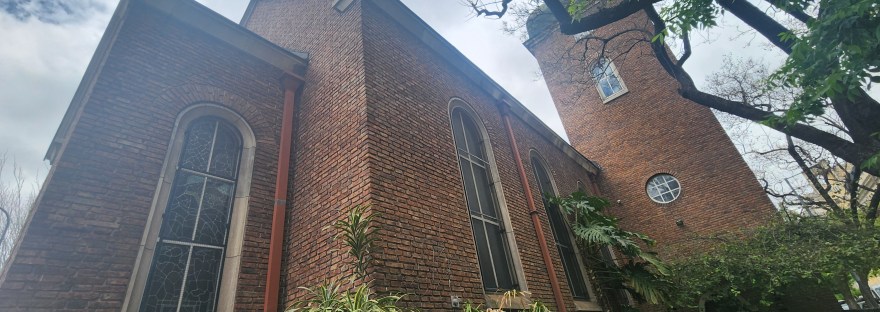
If you ask anyone around the world what type of food they think of when they think of Argentina, most will probably say steak. We salivate at the idea of juicy, tender steak grilled to perfection. However, occasionally we crave something different to keep our taste buds on their toes. The Club Sueco’s Swedish smorgasbord was the perfect opportunity to try something new.
Club Sueco Restaurant, the Swedish Church, and the Swedish Argentine Chamber of Commerce share the red brick building built in 1945. Architect Edmundo Klein added elements of Nordic Neo-Gothic and Scandinavian Modernist styles to his design, which includes a pitched roofline and a modest bell tower.
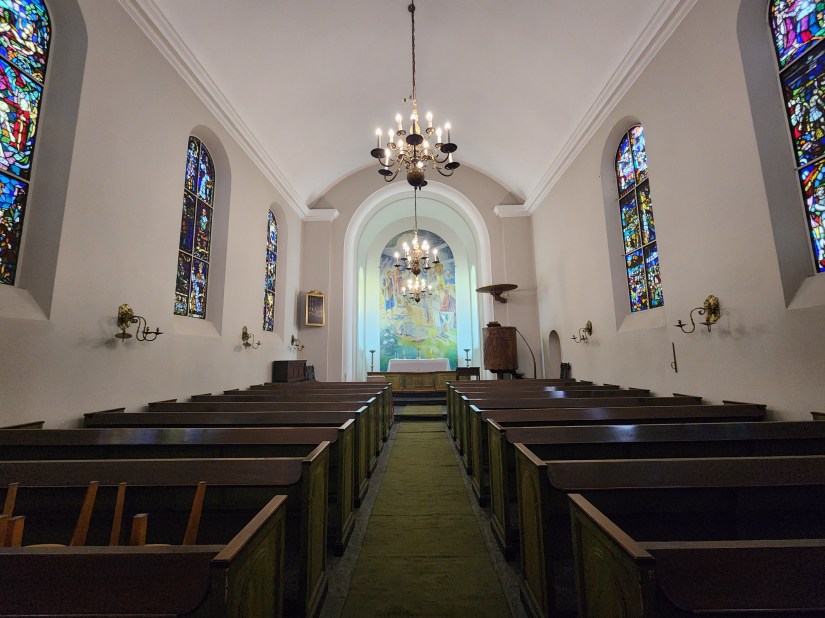
We made a reservation for Sunday lunch. The studded wooden door was closed, and we rang the bell. The interior is minimalist, as you’d expect from a Scandinavian building. Nautical motifs, like a salvaged ship’s bell, and typical ornaments, like red Dala horses, showcase Swedish heritage and culture, along with a portrait of Their Majesties, King Carl Gustaf and Queen Silvia.
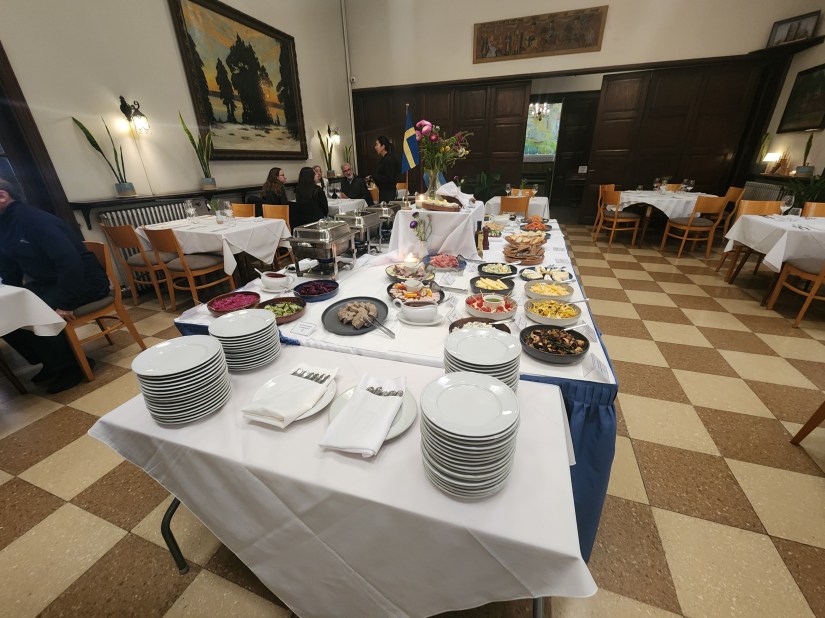
The smorgasbord was laid out on a big central table with both hot and cold dishes. I tried and loved the Köttbullar (meatballs in gravy), Raggmunk (potato pancakes), and the black bean stew. I passed on the gravlax and the different types of salmon and herring dishes, which my husband enjoyed, but made a beeline for the salads: potato, curried cabbage, and mushrooms. I loved the new (to me) combinations of flavours.
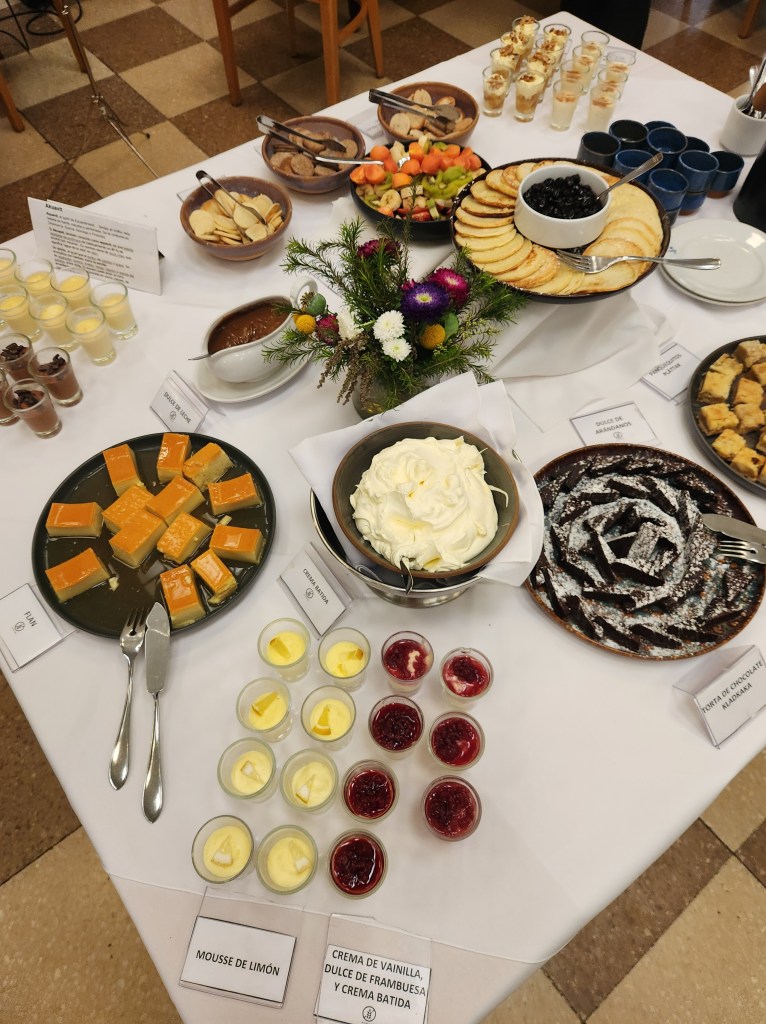
As for desserts, the Kladdkaka, a dense chocolate torte, and the ris a la Malta, rice pudding, washed down with a glass of Glögg, were my favourites. We also enjoyed the apple tart, the spiced biscuits, and the vanilla pudding with lingonberry preserve. The flan, or crème caramel, was the local touch. The desserts weren’t overly sweet, which I prefer.
Each dish had a card with its name in Spanish and in Swedish. I took pictures of some cards so I can look up the recipes and make them at home, especially the pickled beet (Rödbetor), the Inlagd gurka (pickles), and the Rødkål (braised cabbage).
The experience is reasonably priced and includes the buffet and unlimited refills of still and sparkling water, which is a rarity in Buenos Aires. The staff is very attentive and unobtrusive.
Historically, the number of Swedish immigrants in Argentina is relatively small but influential: Swedish engineers helped develop the railway and road infrastructure that is used to this day. Also, many Scandinavian colonists settled in Misiones, where they founded the city of Oberá. In Buenos Aires, the church provided shelter to Swedish sailors stranded here during World War II and acted as a community hub.
Here’s a bit of trivia. One of the most successful and popular Argentine football teams, Boca Juniors, of Diego Maradona and Carlos Tévez fame, initially had a black and white jersey. But so did an opposing team. They decided that whichever team lost should find new colours. The club authorities couldn’t agree on what colours to pick, so they decided to take the colours of the first ship to enter the port of Buenos Aires. Since it was a Swedish vessel, blue and yellow, later changed to gold, became part of Boca’s identity.


