
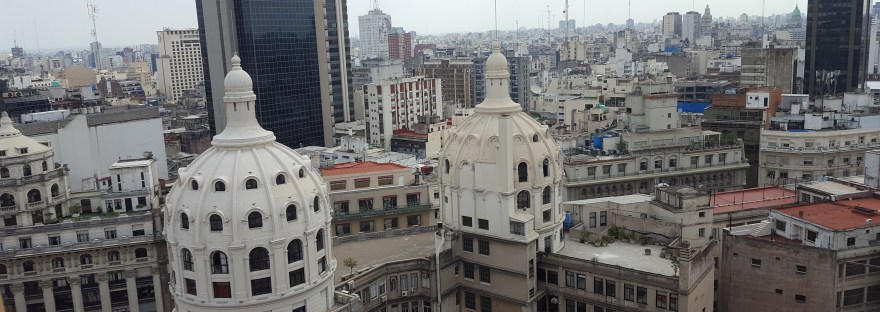
I worked in central Buenos Aires for years and walked past some grand architecture without really seeing it. When you live in a city, you suffer from local blindness: you see the same places so often that you stop registering them.
I only started to appreciate the architectural treasures of Buenos Aires after years of living abroad. I felt like I was getting to know Buenos Aires for the first time.
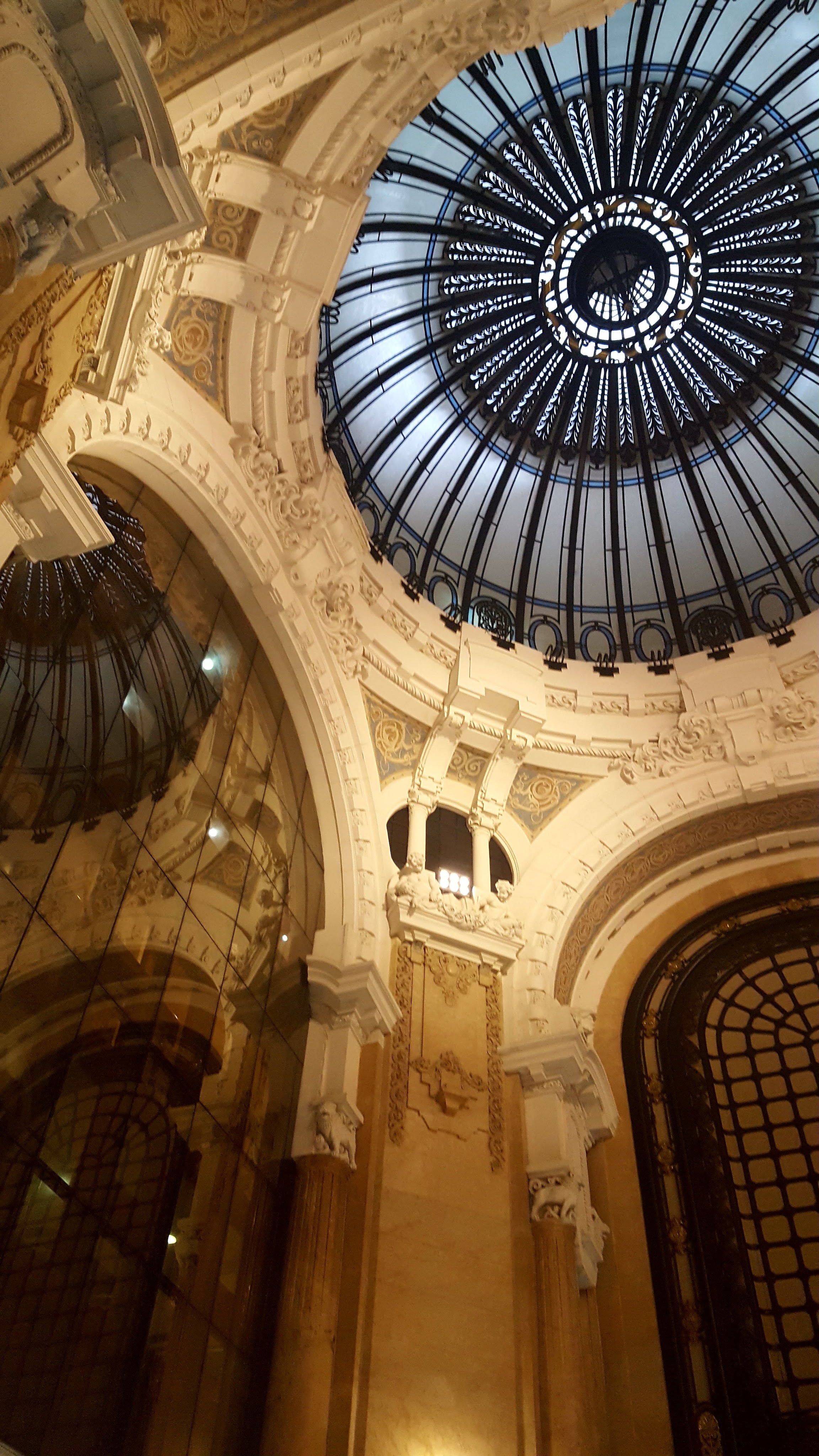
Galería Güemes was one of the places I used to walk past on my way to work. One day, I had time to spare and decided to see the inside of this famous arcade. It felt like going back to the Belle Époque. I had to slow down to appreciate the alabaster lamp, the wrought-iron railings, the murals, and the lofty steel-and-copper central dome.
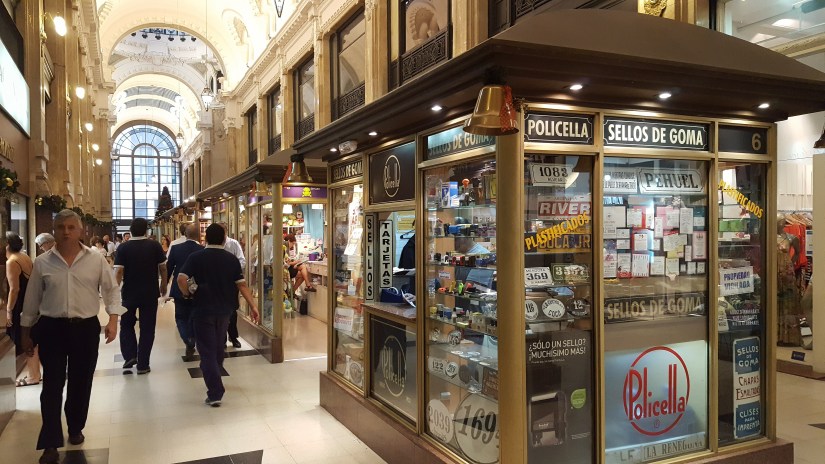
This 116-metre shopping arcade connects two streets in the busy Microcentro financial and government district. The entrances/exits are at Florida 165 and San Martín 170.
Like many early 20th-century buildings in Buenos Aires, Galería Güemes was built in the Art Nouveau style. Construction began in 1913, when Argentina’s economy was bountiful thanks to agricultural exports. With money pouring in, Buenos Aires experienced a construction boom that transformed the sleepy colonial town into a prosperous world-class city.
The investors, Emilio San Miguel and David Ovejero, were two millionaires from the northern province of Salta. They decided to build an arcade with shops and a 14-floor office and luxury apartment building topped with an observation deck. At the time, it was the tallest skyscraper in the city.
San Miguel and Ovejero named it Galería Güemes to honour General Martín Miguel de Güemes, an independence hero from Salta. Many materials were imported from Europe. Construction costs spun out of control after World War I started. The investors almost went bankrupt when the ship carrying Italian marble for the building’s façade was sunk by a German U-boat.
However, they managed to finish construction, and the building was officially opened in 1915. The apartments were luxury rentals, a sort of turn-of-the-century Airbnb. The most famous resident was French author and aviator Antoine de Saint-Exupéry, who rented apartment 605. There, he wrote his novel Night Flight (Vol de nuit), based on his experiences as a commercial pilot in Patagonia.
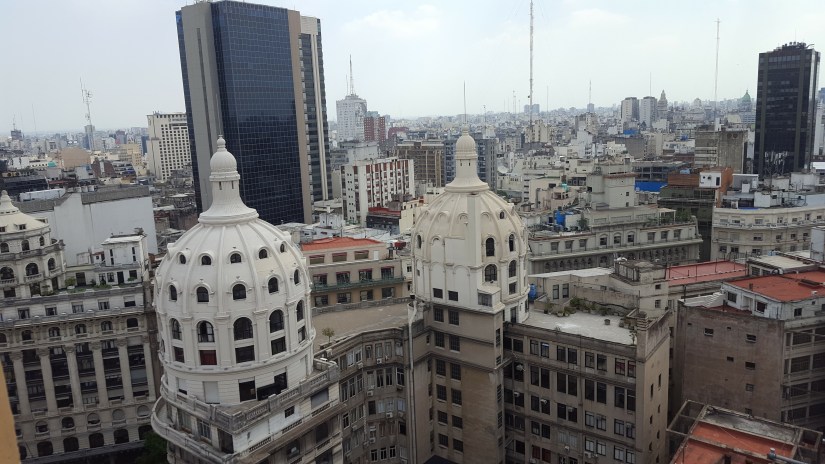
Back in 2013, I learned that the observation deck had been restored and was open to the public. On our next visit home (my husband and I were still living abroad), we planned a day out with our nieces, which included climbing to the top of Galería Güemes.
After admiring the intricately ornate vaulted ceilings, we headed to the Torre Mitre elevator bank. The beautiful wrought-iron grillwork is breathtaking. We rode the elevator to the 14th floor, then climbed a narrow metal spiral staircase to the observation deck.
We spent a quietly satisfying half hour trying to spot and name iconic buildings from above, like the twin domes of the Bencich building or those of the Otto Wulff building. This Jugendstil (the German variant of Art Nouveau) construction is said to have housed Austria-Hungary’s embassy. It turned out to be an urban myth. The shimmer of the River Plate peeked playfully between the high-rises to the east, where the port was the final destination of the ships carrying the building’s imported materials.
If you go:
Galería Güemes, Florida 175
Mirador: Torre Mitre elevator bank. Opening hours: Mondays through Fridays, 11 am, 12 pm, 2 pm, 3:30 pm. Closed on weekends, national holidays, and bad weather. Entry fee: AR$10,000.


