The Origin of the Pasajes
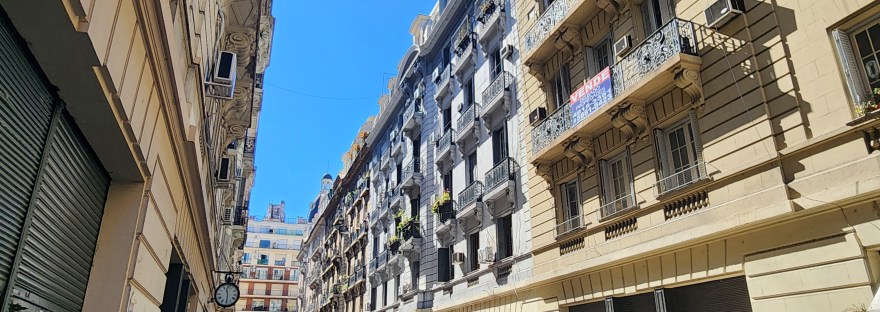
The streets of Buenos Aires are dotted with pasajes (passages) that disrupt the monotony of the city’s grid plan. The first passages served a specific purpose: to address the housing crisis caused by the yellow fever epidemic of 1871.
At that time, the well-to-do families fleeing the pest-stricken southern neighbourhoods relocated to the northern part of the city. However, there weren’t enough homes for all. By dividing a city block into two, engineers and architects created more space to build homes. Over a hundred passages were built between the 1880s and the first half of the 20th century.
Passages are usually straight and connect two streets. However, there are also L- and U-shaped passages. Most are public thoroughfares, although some private passages are open to the general public.
Pasaje Rivarola
I visited -or revisited, in some cases- a few Buenos Aires passages for an article (read it here). Pasaje Rivarola was among the new-to-me ones, and it became my favourite.
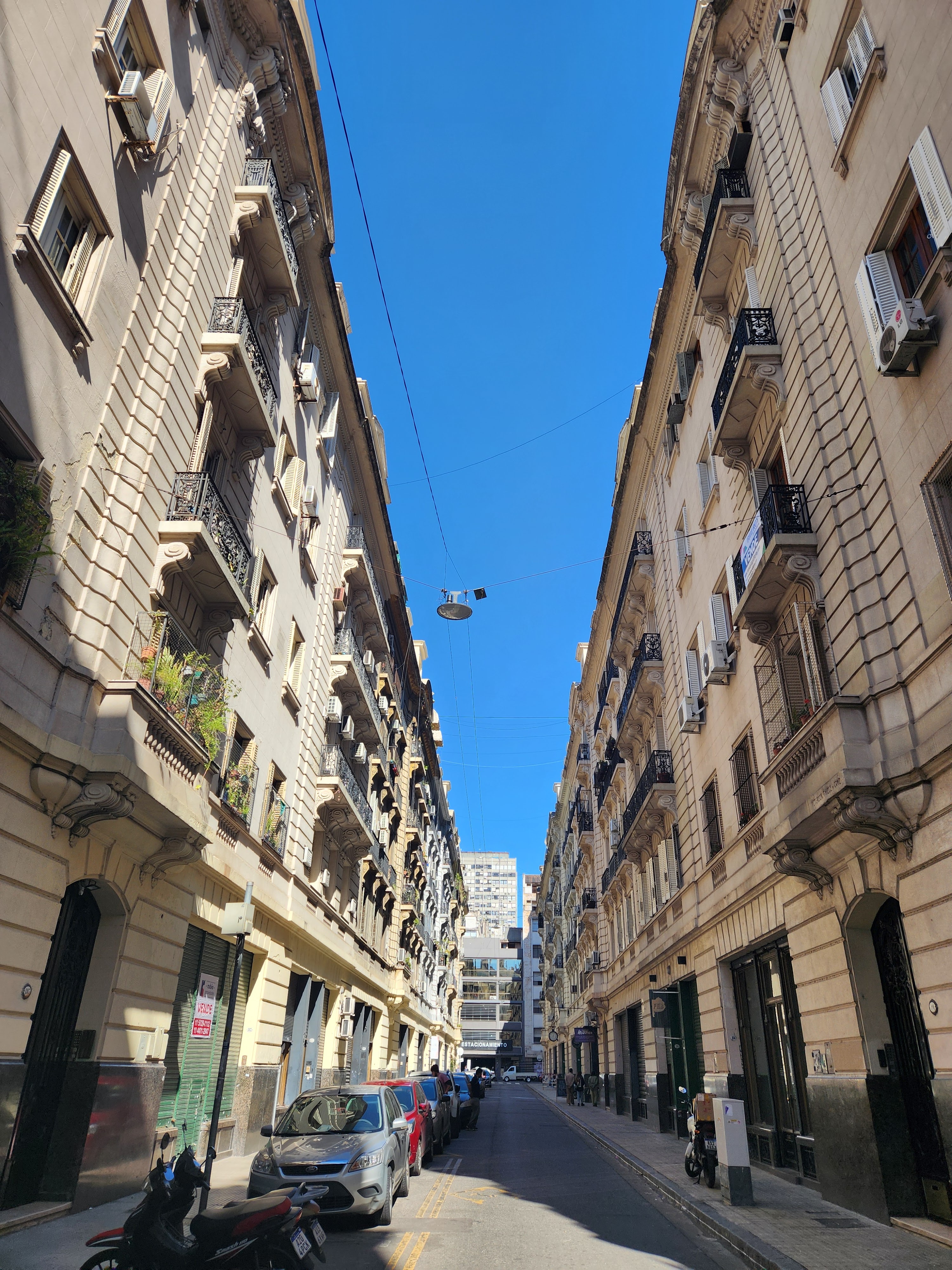
Despite its central location, it was very quiet. You forget you’re a few hundred yards from the National Congress; all the cacophony of a big city fades away. You’re inside an urban microcosm of elegant calm.
Pasaje Rivarola is said to be the only street in Buenos Aires with a symmetrical design. It has eight buildings, four on each side. Built between 1924 and 1926, the passage was originally called La Rural after the insurance company that invested in the project.
The Beaux Arts buildings are five-story high and feature slate mansard roofs. Each of the four corners is topped with a cupola. Petersen, Thiele y Cruz, the renowned construction company in charge of the project, spared no expense. They used luxury materials, such as marble, Slavonian oak, and slate, and intricate ornamental ironwork on doors and balconies.
Pasaje Rivarola today
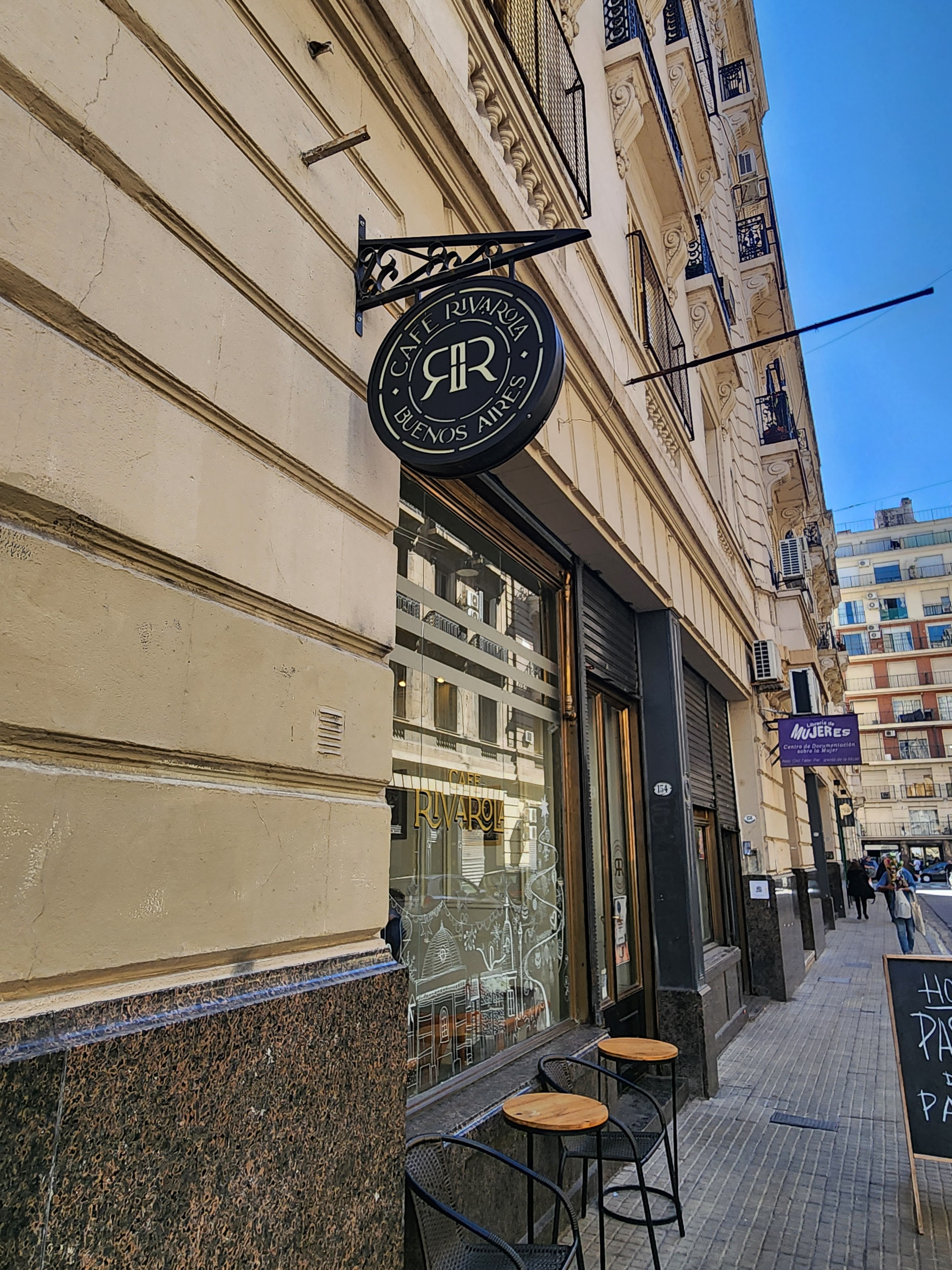
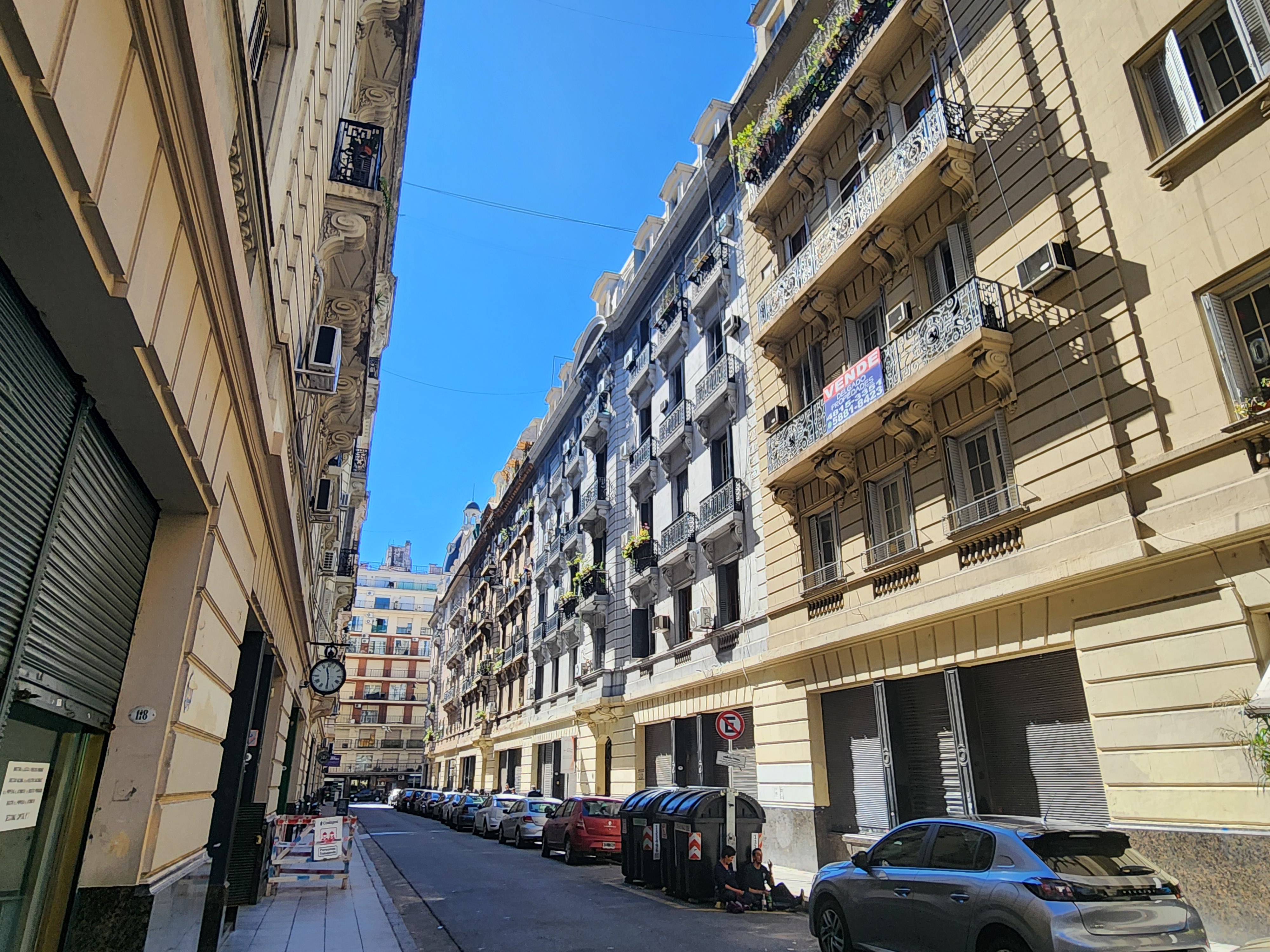
In its heyday, the passage was lined with shops, including a celebrated clockmaker’s workshop. A clock on the wall bears witness to the site’s past. Today, you’ll find an art gallery, a florist, a music shop, a feminist bookshop, and a cafe. I adored the cafe’s original features with a modern twist.
If you’re in the area, do visit Pasaje Rivarola. You’ll feel transported to a bygone era of Buenos Aires. Browse some books or some artwork and sit down for a restorative cup of coffee. Muse about the passing of time, how the past and the present connect. And what a beautiful city Buenos Aires is! I, for one, am grateful I can enjoy it, warts and all.
Where to find the passage
In the San Nicolás neighbourhood, near Congreso. Pasaje Rivarola runs parallel to Talcahuano and Uruguay Streets and connects the 1300 block of Bartolomé Mitre and Presidente Perón Streets.