
My brother suggested the longer, scenic route that wound its way around the hills. The Sierras de Córdoba showed signs of an incipient autumn. The sun was shining, the temperature was just right: not too cold, not too warm, not too humid. A southerly wind had swept the storms of the previous days away. We were ready to enjoy our day trip to Colonia Caroya.
Colonia Caroya is located about one hour north of the city of Córdoba, Argentina. The town was established in 1878, but the area’s history goes back to the early 17th century. The Jesuits settled in Córdoba in 1599 to proselytize, educate the colonial elites, and establish a strategic hub for the order in South America. The Society of Jesus founded Argentina’s oldest university, as well as Montserrat College and the Compañía de Jesús church in the city of Córdoba.
Soon after settling, the Jesuits established six estancias, or working estates, and used the proceeds to fund their educational and pastoral activities. I dragged two men and two teenage boys (i.e., husband, brother, and nephews) along with me to visit the Jesuitic estancia located in Colonia Caroya. If you were wondering, they came willingly!
Estancia Caroya
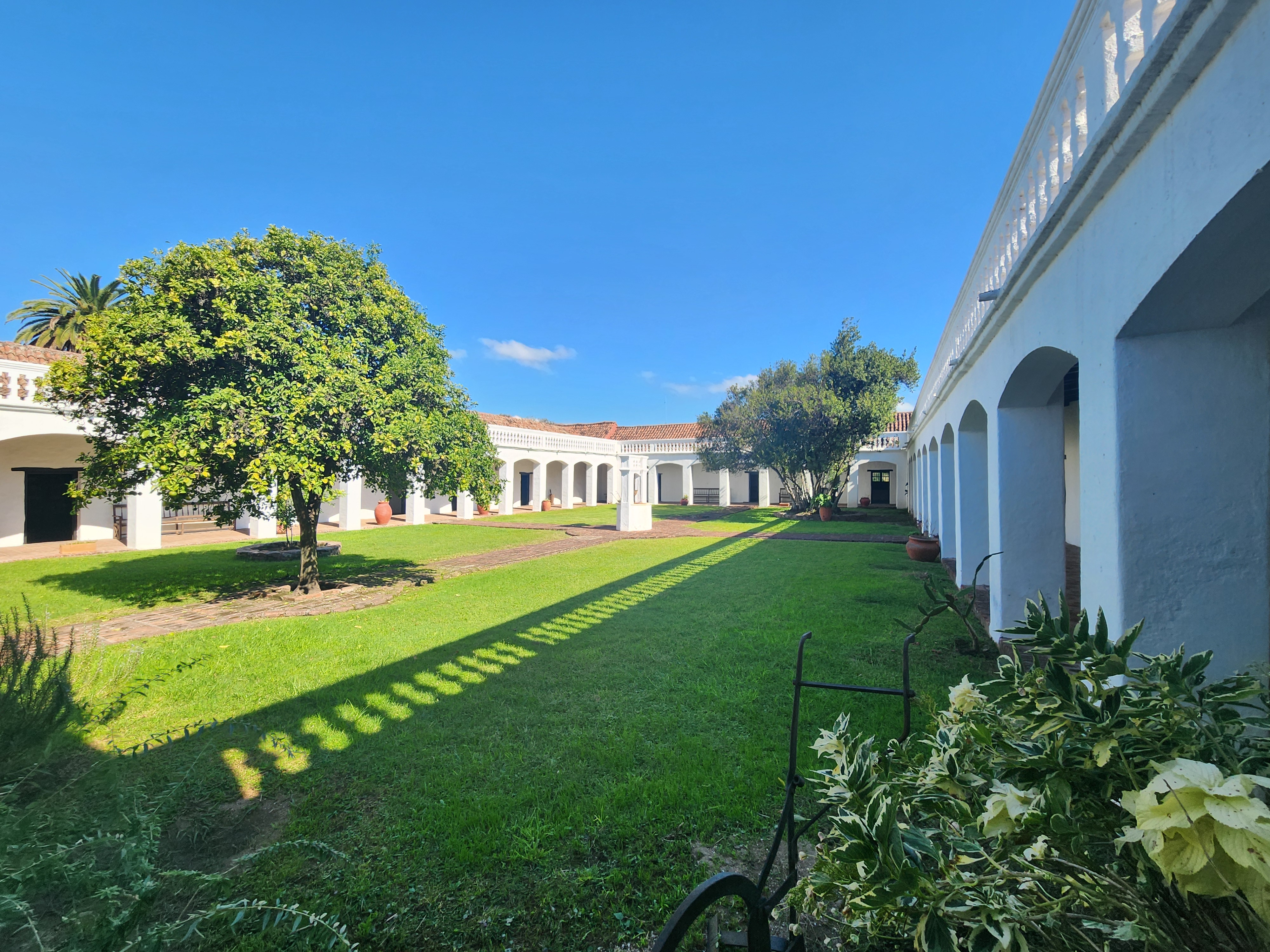
Estancia Caroya, together with four other estancias and the Jesuit Block (an ensemble of religious and educational buildings), was designated a UNESCO World Heritage site in 2000. The strikingly white main building is in the Spanish colonial style. The cloister-like construction that wraps around a large patio with a water well in the centre and some orange trees.
After the expulsion of the Jesuits in 1767, their properties went to the Crown and then to the fledgling nation. In 1814-16, Caroya became a knife and sword-making workshop that supplied the army. Decades later, the estancia housed Italian immigrants from the Friuli region. Each wing is dedicated to one period: the Jesuits (1616-1767), the weapons factory (1814-1816), and immigration (the second half of the 19th century).
Each one of us found something of interest, whether it was the ancient domestic chapel or the collection of swords and bayonets used in the Wars of Independence (1810-1816). As Argentines, the most moving part of the visit was knowing that our two greatest independence heroes, Gen. San Martín and Gen. Belgrano, had stopped there to rest from fighting the Spanish in the North.
Wine and salami
The Friulian immigrants, from northern Italy, brought their strong work ethic. Their strong legacy lives today in the wine-making industry and the exceptional salami and cured meats. The type of salami made in Colonia Caroya was granted a geographical indication a few years ago. It means that the traditional recipe is protected.
We sat down for a picada for lunch. It consisted of a selection of local cheeses, jamón serrano, bondiola (similar to coppa), salami, olives, pickles, and bread. Absolutely everything was made locally, and you can taste the difference.
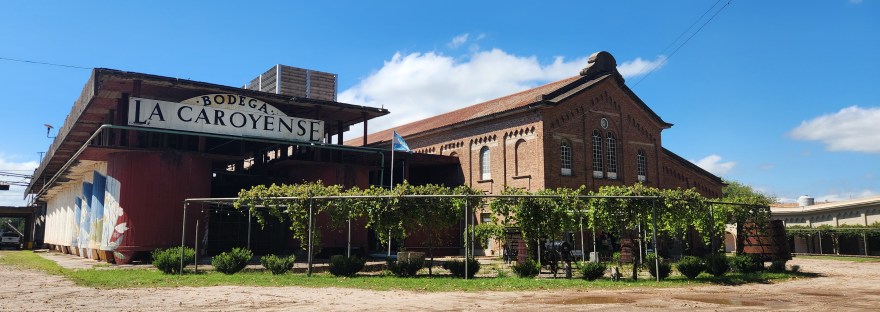
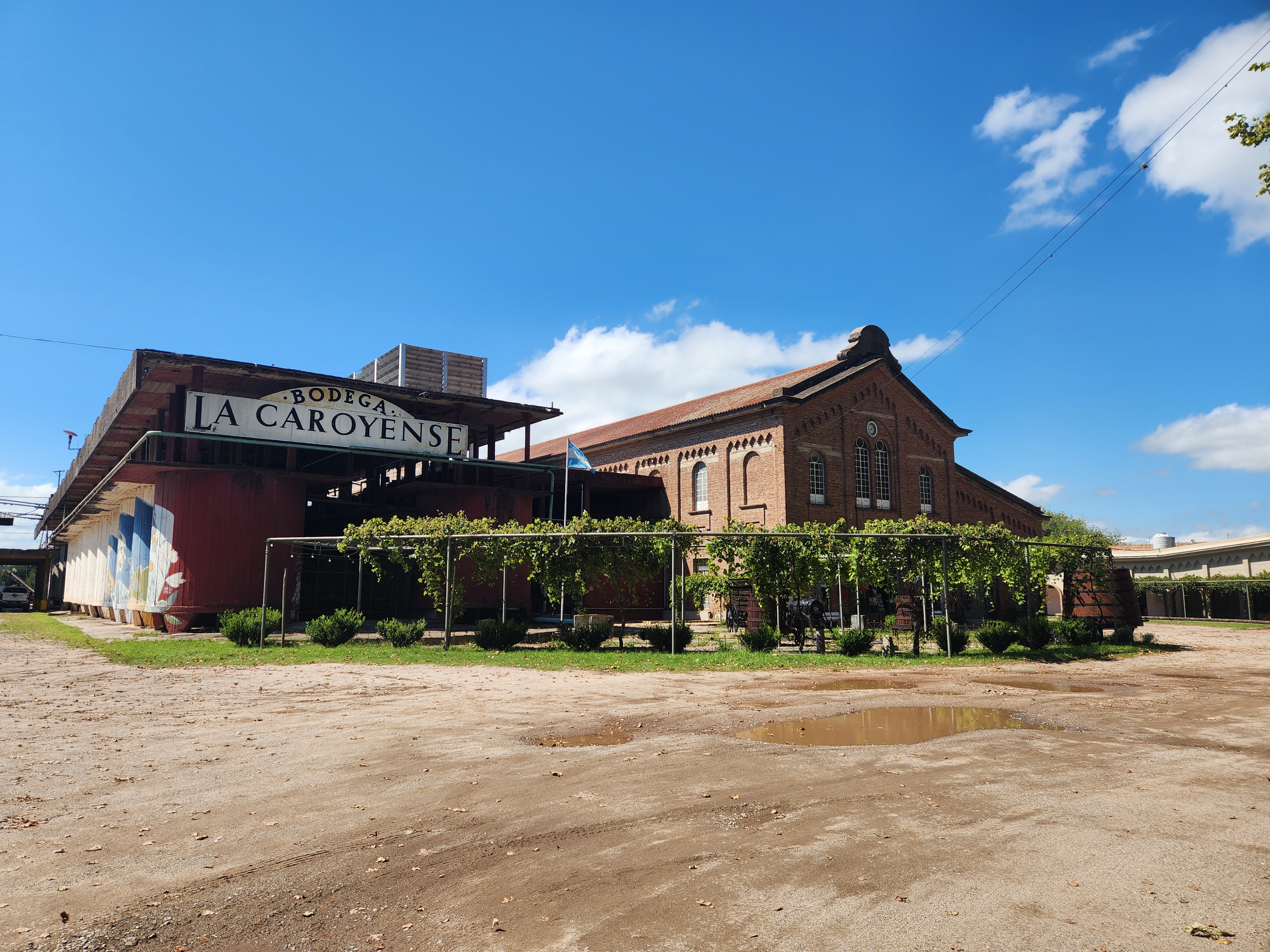
Back in the early 1930s, 34 Friulians founded Bodega La Caroyense, the oldest winery in Córdoba. Their descendants managed the business until it went bankrupt in 2001 and sold it. It has an installed capacity of 18 million liters of wine, but it produces only 2.5 million or so. We took a guided tour with a lively and engaging guide. It ended with a tasting, of course. And a purchase or two.

 anaastrioreilly.com